We recently produced five oversized pickleball court fence banners for a longtime customer.
The banners were installed at a sports complex in Puerto Rico and used to create a continuous branded backdrop around several pickleball courts. Each banner was nearly 60 feet long, and the tallest pieces measured almost 9 feet high.
Size was only one part of the challenge. The customer also needed the banners to:
- Cover existing mesh graphics on the fence
- Withstand repeated installation for tournaments
- Use strong edge reinforcement and larger grommets
- Meet a tight event deadline
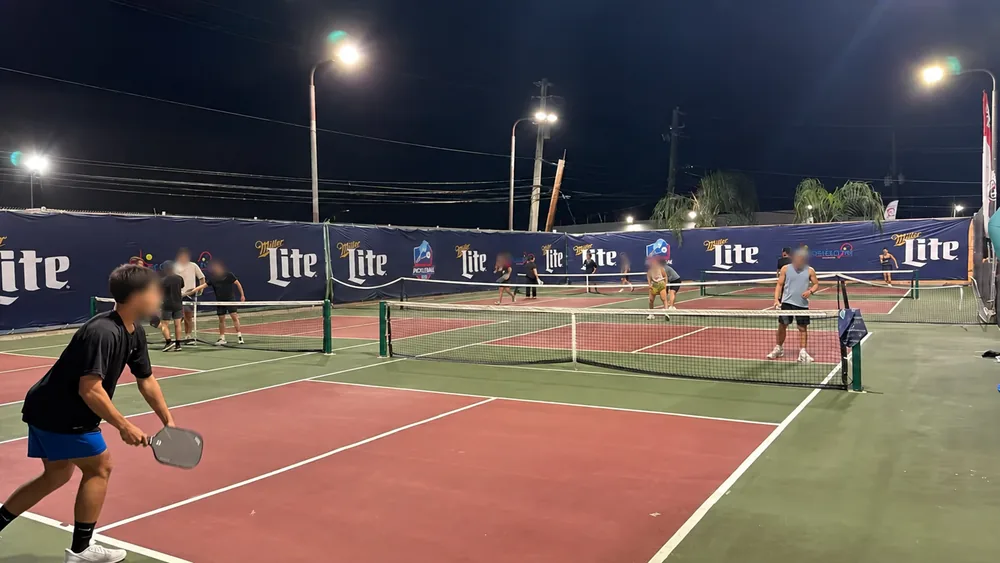
After the banners were installed, the customer voluntarily shared photos from the facility. The navy banners looked clean and highly visible under the court lights.
With the customer’s permission, we are sharing the complete project as a real-world case study.
What Did the Customer Need?
The customer wanted to turn several sections of chain-link fencing into one continuous branded environment.
The design used a dark navy background with repeating Miller Lite, Puerto Rico Kitchen 2026, and La Academia Pickleball graphics.
Because the fence sections were not all the same size, each banner required its own layout. The logo size, spacing, and overall visual rhythm needed to remain consistent across the complete installation.
Finished Banner Sizes
Approximately 60.4 × 4 feet
Approximately 59.2 × 8.75 feet
Approximately 60.4 × 3.2 feet
Approximately 59.3 × 8.75 feet
Approximately 59 × 8.75 feet
Together, the five banners covered nearly 300 linear feet of fencing.
For a project of this size, we could not simply enlarge the same artwork five times. Each layout had to be adjusted individually so the banners would look like one coordinated court-signage system after installation.

This Was More Than a Standard Fence Banner Order
As we discussed the installation with the customer, we learned that the new banners would be mounted over existing mesh banners.
The new material therefore needed to cover the older graphics behind it.
As the customer explained:
That detail significantly affected the material decision.
For a typical outdoor fence banner, mesh may be one of the first materials considered. However, if another printed banner is already installed behind it, the open construction of mesh may allow the older graphics to remain visible.
Lighting, fencing, and other objects behind the new banner can also interfere with the front design.
Mesh or a Heavier Material?
Because these banners were so large and would be installed outdoors, we initially considered mesh.
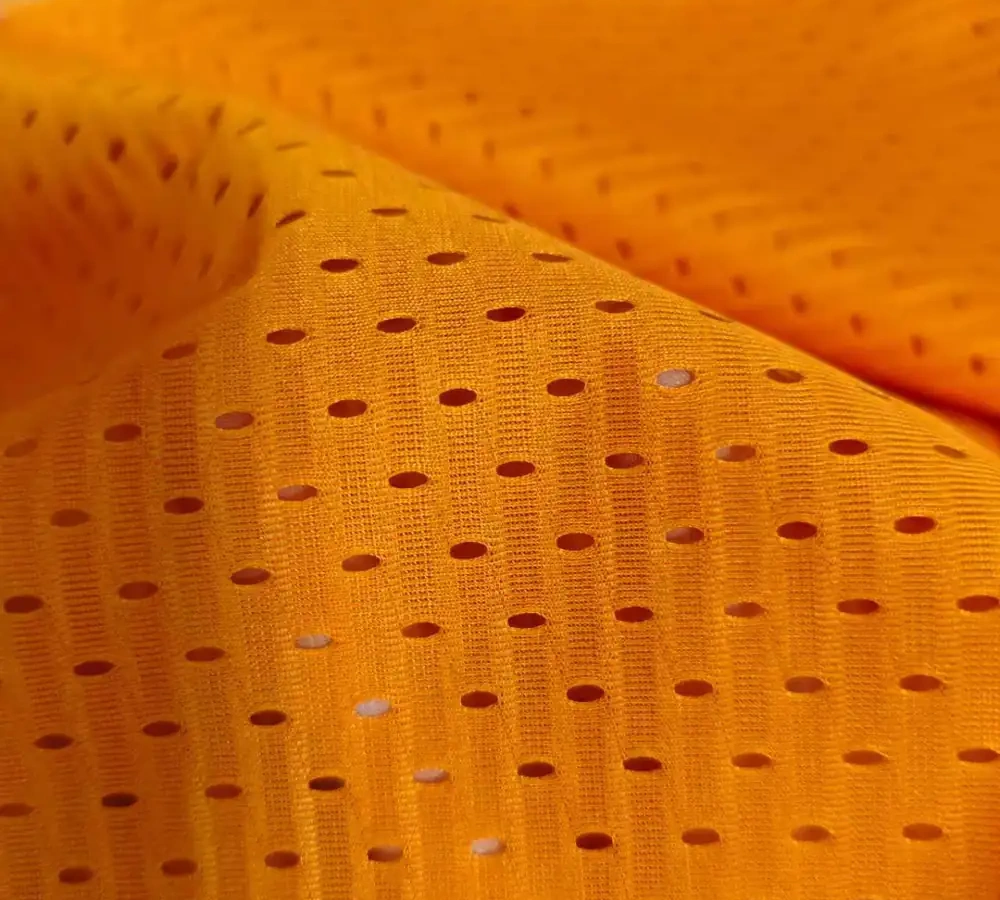
Mesh contains thousands of small openings that allow some air to pass through the material. This can help reduce wind pressure on the banner, its attachment points, and the fence.
For large banners in exposed outdoor locations, that airflow can be a valuable advantage.
However, this project placed more importance on coverage and nighttime visibility.
The facility operates under bright court lights, and the artwork uses a dark navy background. If the material were too transparent, the existing graphics and lighting behind the banner could weaken the background color and reduce the contrast of the sponsor logos.
We reviewed several possible constructions with the customer, including:
- Standard mesh
- Black-backed material
- Spliced blackout material
- A three-layer construction with a blackout center
- Heavier, wide-format warp-knit display fabric
Material availability also affected the decision because this was a rush order. Some blackout materials were not available in the required width within the customer’s timeline. Using narrower rolls would have introduced additional seams or separate top and bottom sections.
After comparing appearance, coverage, available width, production time, and expected use, we selected a heavier, wide-format material.
It gave the printed graphics a more substantial appearance and reduced interference from the fence and older artwork behind the new banners.
Material selection was important, but it was only one part of the project. The customer was equally concerned about how the banners would hold up during repeated use.
The Banners Needed to Be Installed More Than Once
These banners were not intended for a single installation.
The customer planned to use them for different tournaments, which meant they could be installed, removed, and installed again.
As the customer explained:
The customer specifically requested:
- Strong perimeter reinforcement
- Wider reinforced edge areas
- Larger metal grommets
- Multiple attachment points
- Finishing suitable for repeated installation
These were reasonable concerns for banners measuring almost 60 feet long.
If a banner of this size only has corner grommets—or if the material around each grommet is not properly reinforced—wind and installation tension can place too much force on a small area.
We Produced a Reinforcement Sample First
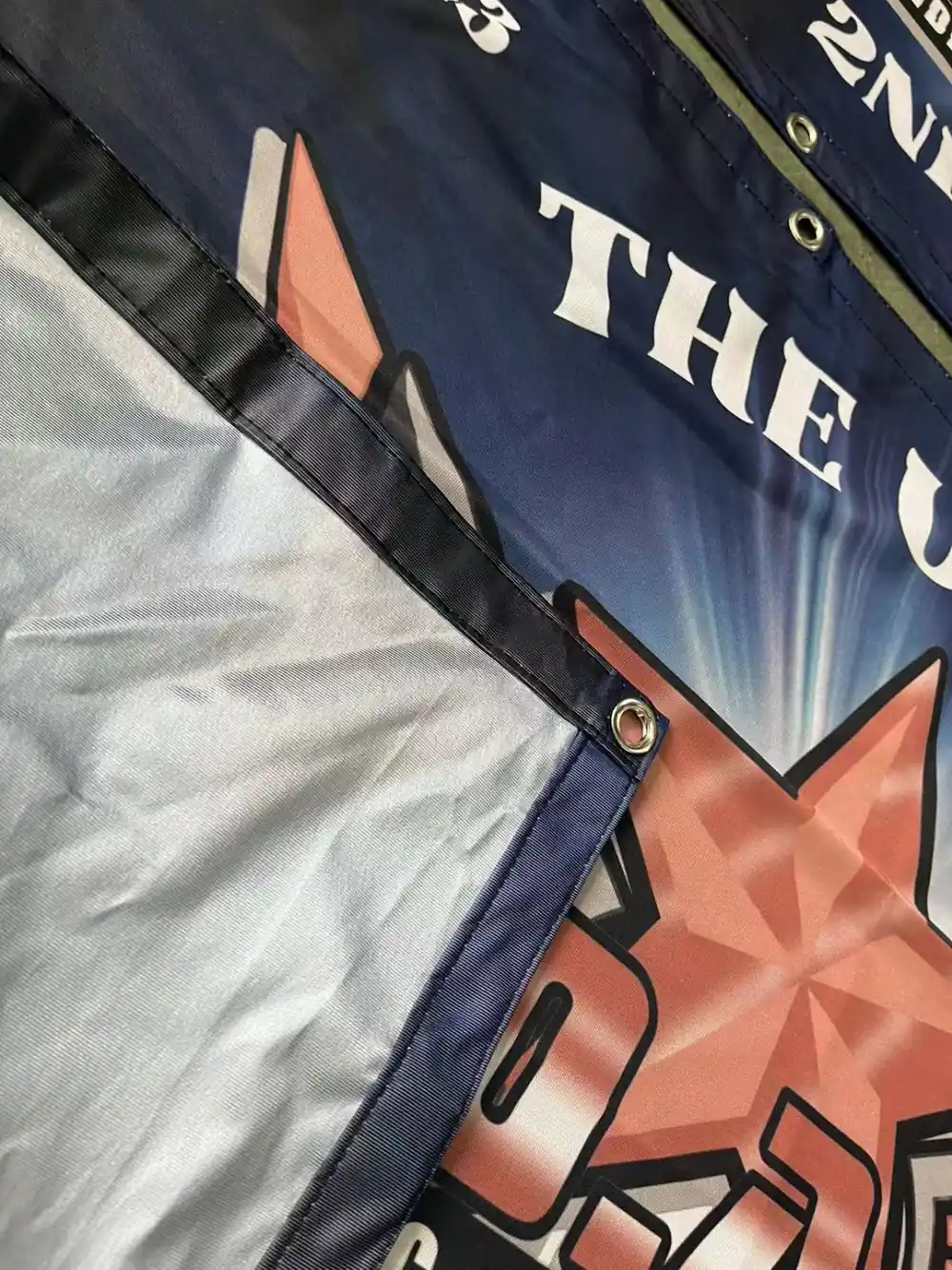
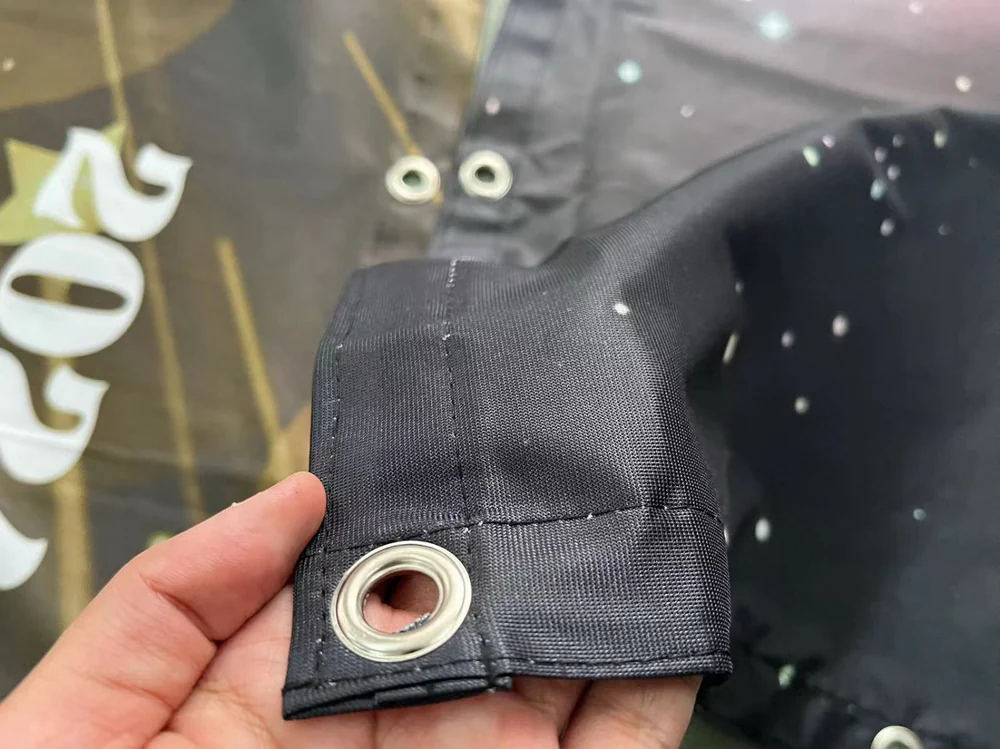
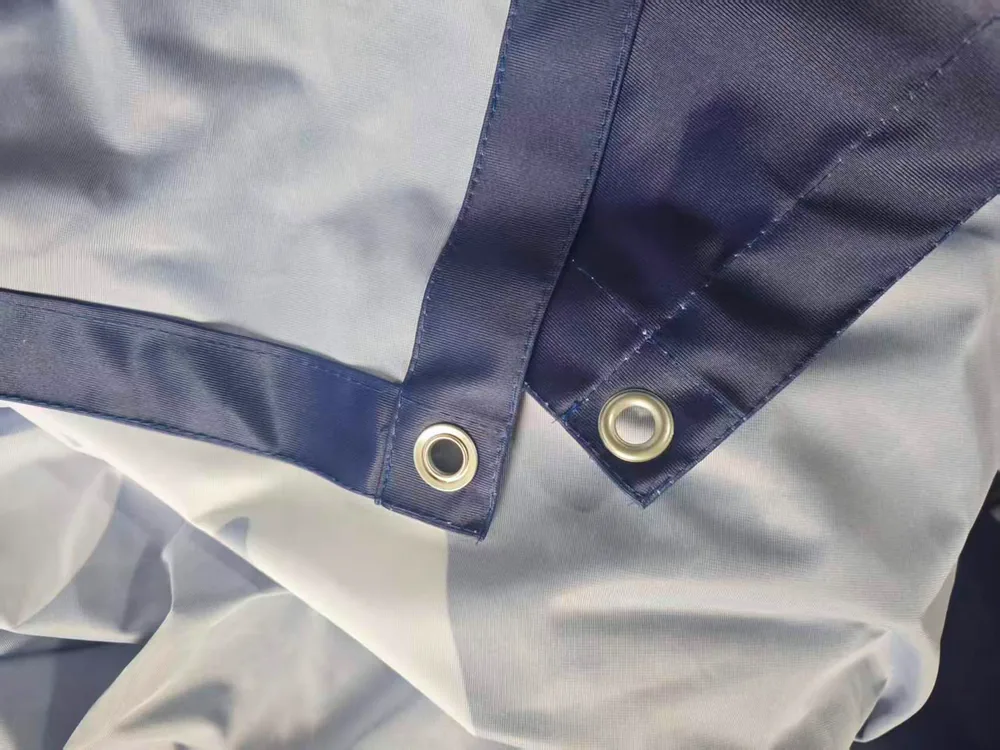
Before final production, we used leftover material to make a trial reinforcement sample. We sent the customer photos of both the front and back for review.
After seeing the first sample, the customer felt the grommets were too small.
The customer was also concerned that a large banner could become heavier when wet, placing additional stress on the attachment points.
Their request was clear:
Based on that feedback, we switched to larger metal grommets and widened the folded reinforcement around the perimeter.
The wider reinforced area gave each grommet a thicker base and helped distribute installation tension over more material.
Producing Nearly 300 Feet of Custom Signage
Combined, the five banners represented almost 300 linear feet of printed court signage.
At this scale, details that appear minor on a computer screen can become highly visible after installation.
Before production, we reviewed:
- The final dimensions of every banner
- Logo size and spacing
- Navy background consistency
- Finished dimensions after sewing
- Reinforcement width
- Grommet position and spacing
- Available material width
- Possible seam locations
- Folding and packaging requirements
Four of the five banners were produced as single pieces without horizontal stitching through the main printed area.
The fifth banner required one splice because the remaining material on the roll was not long enough to complete the piece as a single panel. We documented the issue and informed the customer before shipment.
In B2B custom manufacturing, clear communication matters. If a production detail changes, the customer should know before the product reaches the installation site.
A Genuine Rush Order
The final production plan was confirmed on September 16.
The customer needed the banners installed by the following Thursday because the event was scheduled for Friday.
The customer reminded us several times:
Once the material and finishing method were approved, we immediately finalized the print files and arranged production.
Our workshop worked extended hours to keep the order moving. We also sent the customer progress updates during production.
After receiving one of those updates, the customer replied:
All five banners were completed on September 18.
The difficult part of a rush order is not simply printing faster. Artwork preparation, printing, cutting, sewing, grommet installation, inspection, packing, and transportation all need to remain on schedule.
Regular communication allowed both sides to make decisions quickly while keeping the installation deadline in focus.
The Customer Shared Photos After Installation
Once the banners arrived and were installed, the customer sent us several photos from the facility.
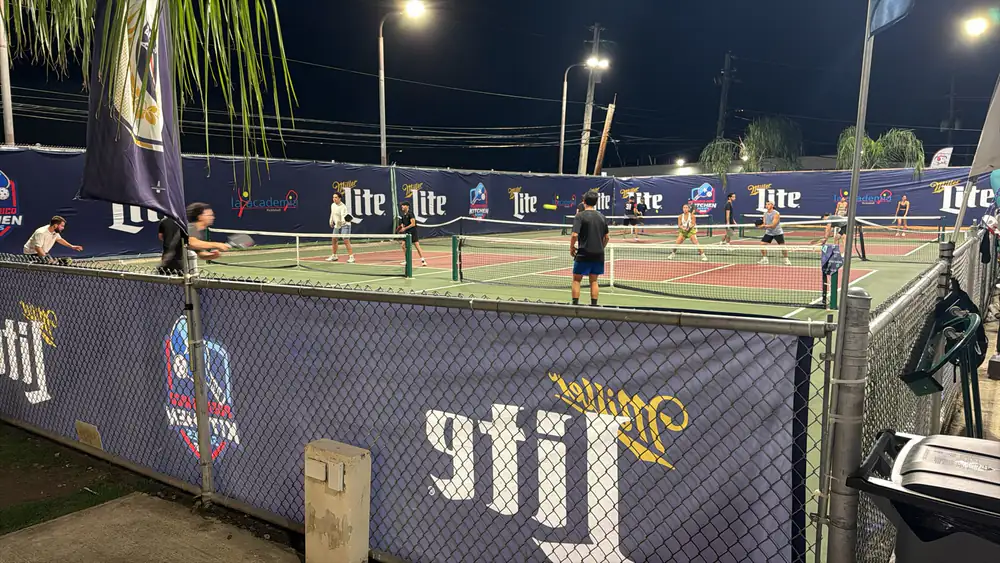
The navy banners extended across multiple courts while maintaining a consistent appearance.
The white and gold sponsor graphics stood out clearly against the dark background. The installation turned ordinary chain-link fencing into a continuous branded perimeter.
Clear Visibility Under the Court Lights
The customer photographed the installation at night, allowing us to see how the banners performed in the actual lighting environment.
Even with several bright fixtures around the courts, the navy background remained visually consistent. The white and gold graphics were clear and did not appear washed out by the light behind them.
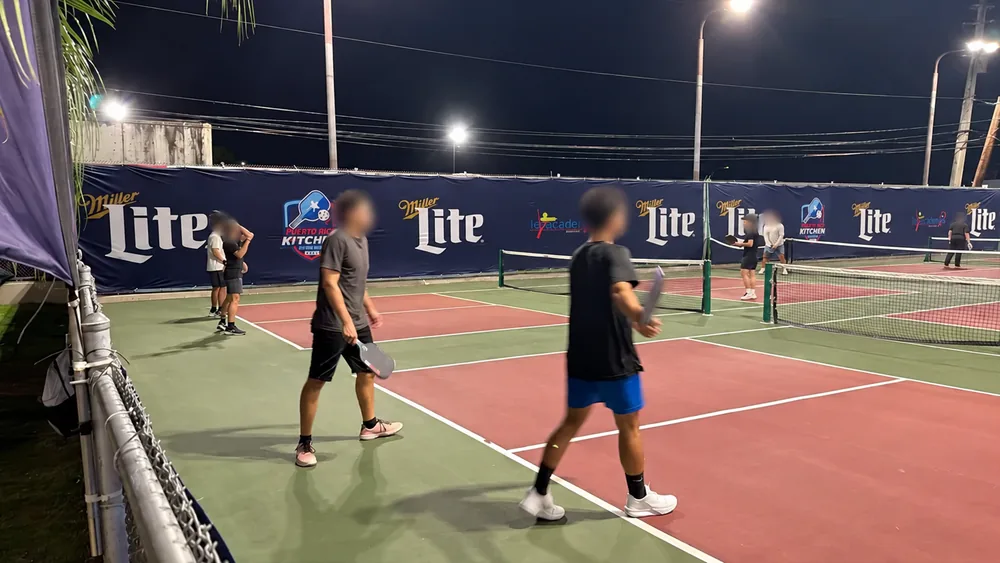
Once all five banners were installed, they did more than display sponsor logos. They also gave the entire facility a more organized, tournament-ready appearance.
Players and visitors could easily see the sponsor graphics from different areas of the venue.
Shared With the Customer’s Permission
The customer voluntarily shared the installation photos and confirmed that we could use them as a project showcase on our website.
Photos from an actual installation are especially valuable to us.
A finished banner may look good in the workshop, but the real test is how it performs once it is installed around the fencing, lighting, existing graphics, and surrounding environment.
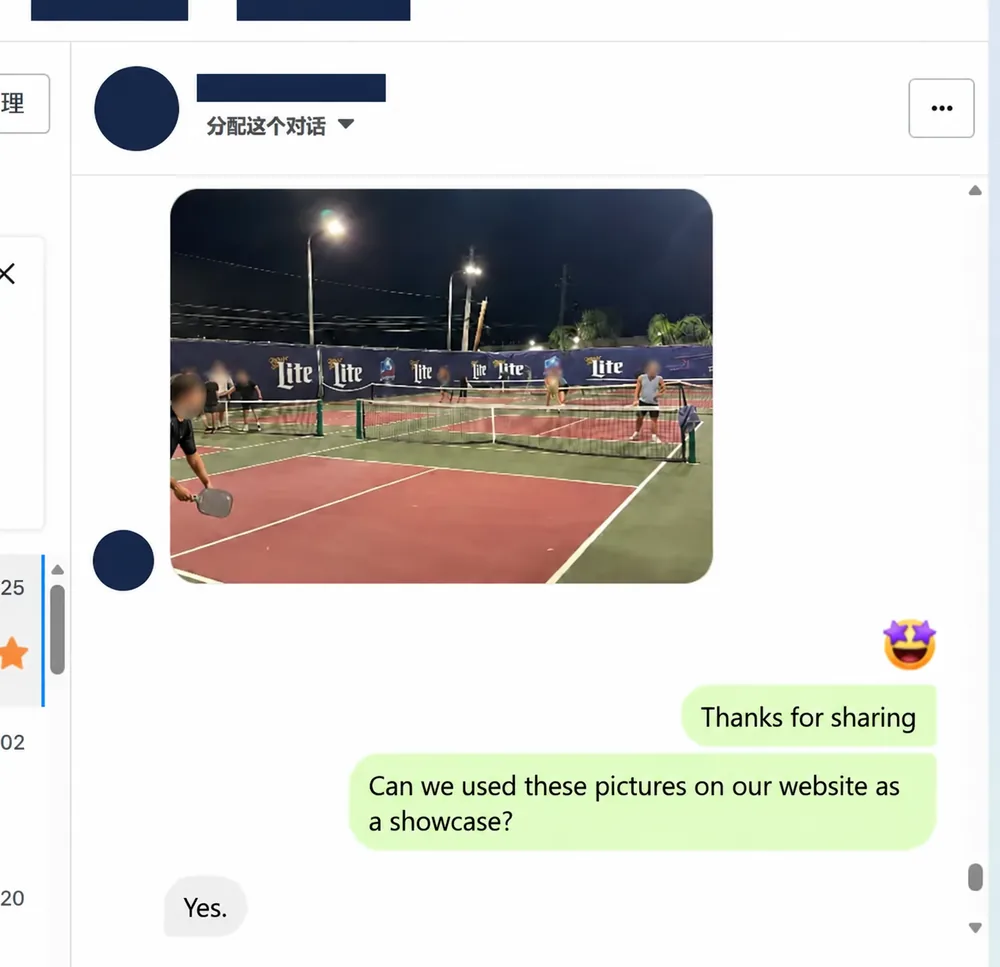
The customer’s photos confirmed that the overall combination of artwork preparation, material selection, printing, and reinforcement worked for the intended application.
What Did We Learn From This Project?
The main lesson is not that a heavier material is always better than mesh.
Both materials have appropriate applications.
The more important lesson is that banner construction should be based on the actual installation environment.
Before producing a similar project, confirm:
- The exact dimensions of every fence section
- Whether graphics are already installed behind the new banners
- Whether the venue operates during the day, at night, or both
- How often the banners will be installed and removed
- Local wind and weather conditions
- Whether the fence can support the expected wind load
- The required grommet size, spacing, and reinforcement
- The installation date—not only the event date
- Whether the available material width can reduce unnecessary seams
The more complete this information is at the beginning, the easier it is to recommend the right production method.
A heavier, less breathable banner can create more wind load than mesh. Before installation, the venue owner or installer should confirm that the fence, mounting hardware, and attachment method are suitable for the banner size and local conditions.
Made for the Real Application—not Just Printed to Size
This project involved much more than enlarging and printing the customer’s artwork.
The five different sizes, existing graphics behind the fence, material availability, rush schedule, larger grommets, and repeated tournament use all affected the final construction.
The finished banners created almost 300 feet of continuous branding around the courts.
Most importantly, the customer shared photos of the completed installation and approved the project for use as a case study.
That is the value of custom production: not applying the same specification to every order, but building the product around how and where it will actually be used.
If you need custom fence banners for a pickleball court, tennis facility, baseball field, sports club, school, or event venue, send us:
- Finished dimensions
- Installation-site photos
- Print-ready artwork
- Expected use
- Required installation date
- Material and reinforcement requirements
Our team can help evaluate the material, printing method, grommet placement, and edge reinforcement for your project.