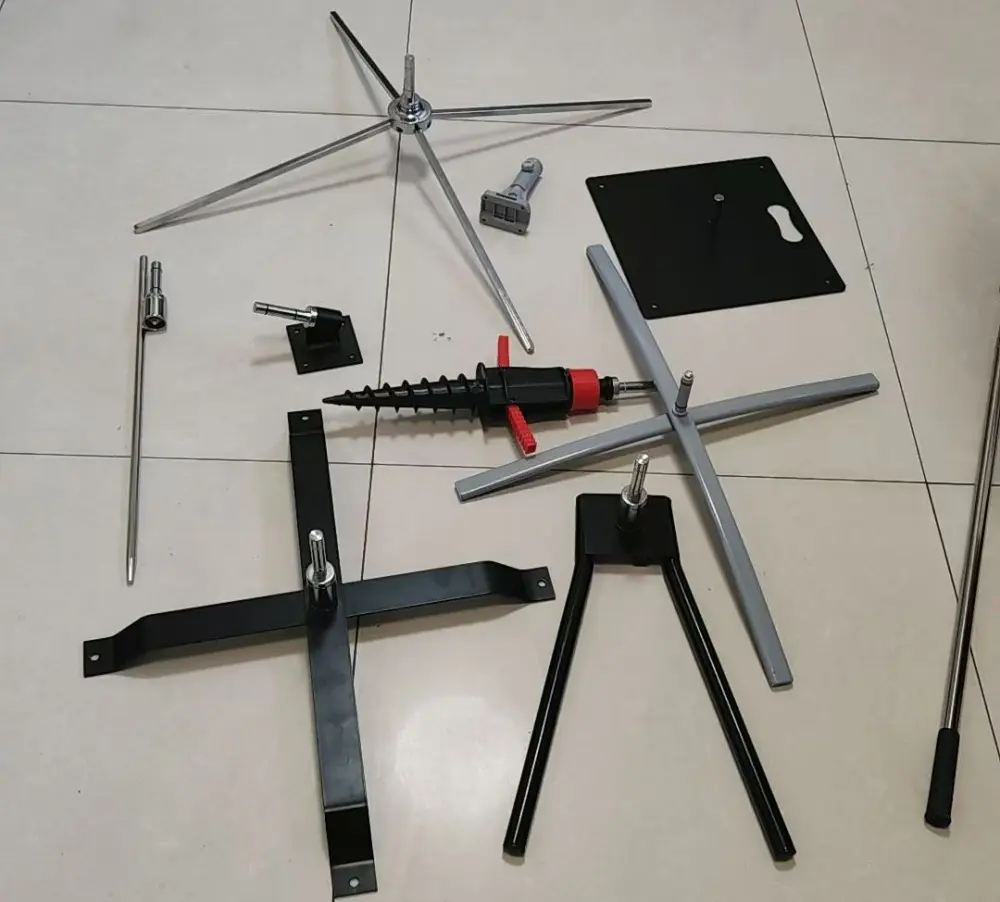
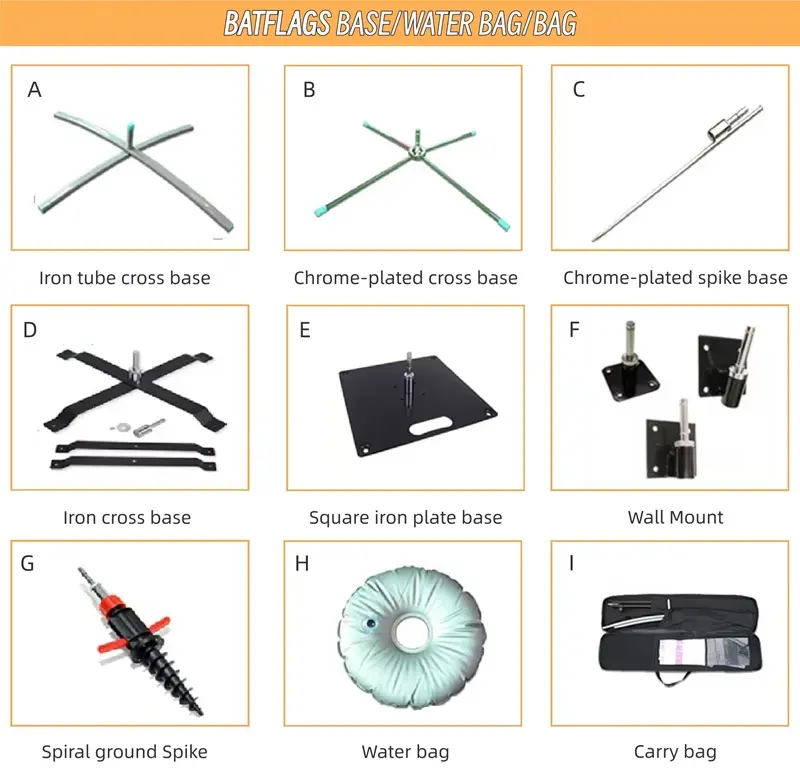
There are more than a dozen types of feather flag bases, as shown in the image below. So, how do you choose the right one?
Before purchasing, consider the ground surface, the installation environment, and the local wind conditions.
Three Factors to Consider When Choosing a Base
Focus on these three questions:
- Is the ground soft or hard?
- Will the flag be used indoors or outdoors?
- Is the location exposed to strong winds?
|
Installation Environment |
Recommended Base |
Additional Weight |
|---|---|---|
| Indoor Flooring | Cross base | A water bag is recommended |
| Outdoor Grass | Ground spike | Usually not required |
| Outdoor Concrete or Asphalt | Cross base | A water bag is required |
| Windy Locations | Steel plate base | Add sandbags or a tyre |
| Long-Term Outdoor Display | Heavy-duty steel plate base | Additional weight is recommended |
Three Important Safety Tips
1. Do not insert the flagpole directly into the soil
Always use a proper ground spike. This helps prevent damage to the flagpole.
2. Take down the flag during severe weather
Remove the feather flag during strong winds, heavy rain, or other severe weather conditions.
3. Choose a safe installation location
Do not install the flag in fire lanes, vehicle exits, or busy pedestrian areas.
Conclusion
Choose your feather flag base according to the ground surface and wind conditions.
A ground spike is suitable for grass and soil. A cross base with a water bag works well on indoor floors and hard outdoor surfaces. In windy locations, use a steel plate base with additional weight, such as sandbags or a tyre.
The correct base and installation method will keep your feather flag more stable. They can also help extend the life of both the flagpole and the printed flag.