When a customer asks for a “double-sided flag” the term may actually refer to three different construction methods.
Before reading further, take a look at the three images below. All three flags display artwork on both sides, but can you identify how each one was made?
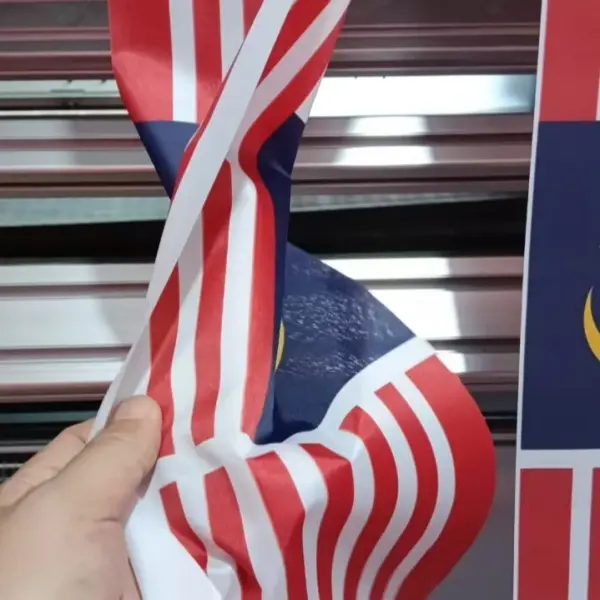
Single-Reverse Printing
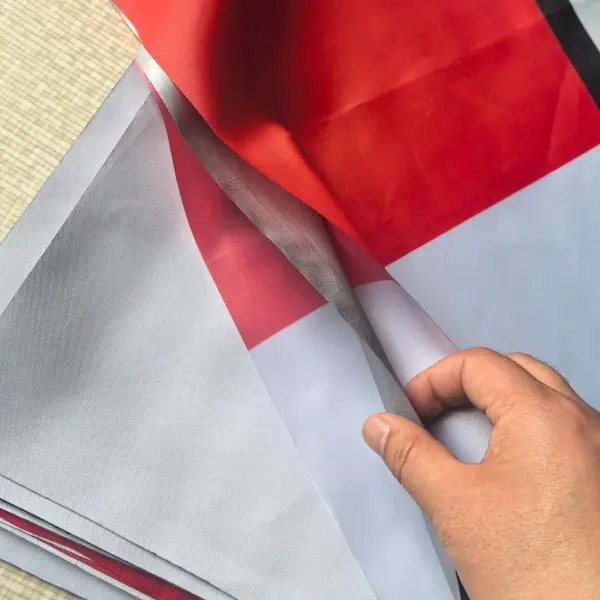
Traditional Three-Layer Construction
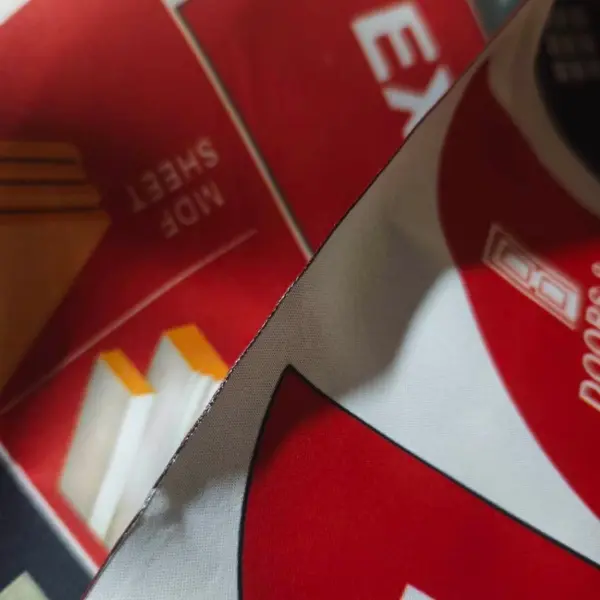
Single-Piece Blockout Fabric
These three methods differ significantly in reverse-side appearance, blockout performance, finished weight, movement in the wind and production cost.
They are not simply low-, medium- and high-quality versions of the same product. Each construction is designed for different artwork, budgets and applications.
Quick Comparison of the Three Methods
| Feature |
Single-Reverse Printing |
Traditional Three-Layer Construction |
Single-Piece Blockout Fabric |
|---|---|---|---|
| Reverse-Side Artwork | Mirrored | Correct-reading | Correct-reading |
| Construction | One piece of standard flag fabric | Printed front + blockout liner + printed back | One piece of fabric with an integrated blockout structure |
| Different Artwork on Each Side | No | Yes | Yes |
| Finished Weight | Lightest | Heaviest | Lightweight and close to a single-layer flag |
| Movement in the Wind | Best | More limited | Very good and generally better than three-layer construction |
| Blockout Performance | Low | Usually the highest | High |
| Production Cost | Usually the lowest | Usually the highest | Relatively low and normally below three-layer construction |
| Best Use | Outdoor applications and bulk orders | Independent artwork and strong separation on both sides | A balance of two-sided display, weight and movement |
Understanding these differences will help buyers choose a suitable construction based on their artwork and intended application.
1. Single-Reverse Printing
A single-reverse flag is made from one piece of standard flag fabric.
The artwork is printed from one side, with the color penetrating through the material and remaining visible on the reverse. The front displays the artwork in the correct orientation, while the back shows a mirrored version of the same design.
Main Advantages
- Usually the lightest of the three constructions
- Flies more freely in the wind
- Relatively low production cost
- Lower packaging and international shipping weight
- Suitable for large-volume orders
Important Considerations
When viewed from the back, text, numbers, arrows and other directional elements will appear reversed.
If the design mainly consists of a logo, solid colors or symmetrical graphics, the mirrored reverse may not significantly affect the final appearance. However, designs containing text, phone numbers, QR codes or directional arrows require more careful consideration.
Recommended Applications
- National and regional flags
- Sports event flags
- Festival and celebration flags
- Flags with simple logos or graphic elements
- Large outdoor flags
- Cost-sensitive bulk orders
2. Traditional Three-Layer Double-Sided Construction
A traditional non-mirrored double-sided flag is made by sewing together three separate layers:
- A printed front flag panel
- A blockout liner
- A printed back flag panel
The front and back panels are printed separately. A blockout liner is then placed between them before all three layers are aligned and sewn together.
The middle liner separates the two printed panels, reducing show-through and preventing the artwork on one side from interfering with the other.
The two sides can display the same correctly oriented design or completely different artwork.
Main Advantages
- Text and artwork read correctly on both sides
- Front and back artwork remain independent
- Different designs can be used on each side
- Usually provides better separation and blockout performance
- Suitable for text, arrows and detailed brand messages
Important Considerations
- Usually the heaviest of the three constructions
- Requires more fabric
- Involves additional printing and sewing work
- Higher production and shipping costs
- May not move as freely as a lightweight flag in low wind
- Large flags may require stronger poles or mounting hardware
Recommended Applications
- Corporate flags containing text
- Indoor and ceremonial displays
- Storefront flags viewed from two directions
- Directional flags containing arrows
- Flags requiring different artwork on each side
- Branding projects requiring strong separation between the two printed sides
3. Double-Sided Printing on Single-Piece Blockout Fabric
The third method uses one complete piece of specialist fabric with an integrated blockout structure.
During cutting and sewing, it is handled as a single piece of fabric. However, the material itself already contains a blockout structure, allowing the front and back surfaces to be printed separately without adding a loose liner between two printed flag panels.
After printing, text and artwork can read correctly from both directions. The two sides can display either the same design or completely different artwork.
Main Advantages
- Artwork reads correctly on both sides
- The two sides can use the same or different designs
- Lightweight finished construction
- Significantly lighter than traditional three-layer construction
- Usually moves more freely than a three-layer flag
- Does not require a separate blockout liner
- Reduces the possibility of a loose internal liner shifting or creating a billowing effect
- Requires less sewing than traditional three-layer construction
- Overall production cost is usually lower than three-layer construction
Important Considerations
- The fabric itself may cost more than standard single-reverse flag fabric
- Available specifications and maximum printing sizes may be limited
- Precise front-to-back print registration is required
- Blockout performance, thickness and fabric feel may vary between materials
- The finished flag may still be slightly heavier than a standard single-reverse flag
- Outdoor suitability should be evaluated according to the specific fabric, flag size and installation method
Recommended Applications
- Flags requiring correctly oriented text on both sides
- Projects that need less weight than traditional three-layer construction
- Outdoor promotional flags containing text
- Flags requiring different artwork on each side
- Projects that need a balance of blockout performance and movement
- Branding projects requiring a professional two-sided display
Buying Guide: Which Method Should You Choose?
Choose single-reverse printing when the artwork mainly consists of a simple logo, solid colors or graphic elements, and correctly oriented text on the reverse is not required. It is also a suitable choice when low weight, free movement and purchasing cost are priorities.
Choose traditional three-layer double-sided construction when text, arrows or artwork must read correctly from both directions and independent front and back designs or stronger blockout performance are more important than finished weight.
Choose single-piece blockout fabric when both sides must read correctly, but you also want a lighter flag with better movement and a lower overall production cost than traditional three-layer construction.
For oversized flags or outdoor locations with stronger wind, the following factors should also be considered:
- Finished flag size
- Finished weight
- Flagpole strength
- Fabric type
- Installation method
- Local wind conditions
Not Sure Which Method to Choose?
Please send us the following information:
- Flag artwork
- Finished size
- Order quantity
- Indoor or outdoor application
- Installation method
- Delivery country
- Required delivery date
The BatFlags production team will evaluate your artwork, size, quantity and intended application, compare the available fabrics and construction methods, and recommend a suitable production solution for your project.